Trees are one of the most overlooked contributors to premature roof failure. At Russell Quality Roofing, we inspect roofs across the Lewiston-Clarkston corridor, the Moscow-Pullman corridor, and the Coeur d’Alene-Spokane corridor and surrounding areas, and the impact of nearby trees is something we encounter far more often than most homeowners expect. The damage rarely announces itself. It builds quietly, season by season, through shade, debris, direct contact, and trapped moisture, until what could have been caught early becomes a full replacement conversation. Understanding how trees affect your roof is one of the most practical things you can do to protect your home.
Why Trees Near Your Home Can Affect Your Roof
Trees offer real benefits, and the goal here is not to suggest removing every tree near your house. What matters is recognizing that trees growing close to or over your roof create conditions that work against your roofing materials over time. The effects are not always visible from the ground, which is part of why they tend to go unaddressed for so long. Knowing what to look for gives you a real advantage in protecting your investment.
Shade and Moisture Retention
Roofing materials perform best when they can dry out between rain and dew cycles. Heavy tree canopy reduces the sunlight reaching your roof, which slows that drying process significantly. When shingles stay damp for extended periods, they become more vulnerable to biological growth, granule loss, and accelerated deterioration. This is particularly relevant across the Lewiston-Clarkston, Moscow-Pullman, and Coeur d’Alene-Spokane corridors and surrounding areas, where our seasons include extended rainfall, overcast stretches, and significant temperature swings. A roof that cannot dry properly ages faster than one that receives regular sunlight and airflow.
Debris Accumulation
Trees shed constantly. Leaves, pine needles, seed pods, and small twigs do not always blow cleanly off a roof, especially when there is canopy directly overhead. That debris collects in valleys, along ridgelines, and in the corners where roof planes meet. Wet debris holds moisture against your roofing materials and creates a sustained damp environment that breaks down shingles and underlayment over time. This is not a cosmetic concern. It is a structural one that compounds with every season left unaddressed.
Tree Branches That Physically Damage Roofing Materials
Beyond the indirect effects of shade and debris, branches that grow close to or over your roof can make direct physical contact with your shingles. This is one of the more immediate ways trees damaging your roof become visible during an inspection.
Branches Scraping Shingles
When a branch extends far enough to rest on or brush against your shingles, it does not stay still. Wind puts branches in constant motion, and that repeated movement acts like sandpaper against the granule surface of your shingles. Granules are not decorative. They protect the asphalt layer beneath from UV exposure and weathering. Once granules are worn away in a concentrated area, that section of your roof becomes vulnerable much faster than the rest. Branches can create distinct wear patterns that map directly to their range of movement in the wind, and those patterns are a reliable sign that a tree has been in contact with the roof for some time.
Falling Limbs During Storms
Storms across these corridors can can bring significant wind, ice loading, and heavy snow accumulation. Weakened or heavily laden branches are susceptible to breaking under those conditions, and when they fall onto a roof, the damage can range from a handful of broken shingles to compromised roof decking. Large limbs can affect the structural integrity of the roof deck in severe cases. If you have significant branches positioned directly over your home, a major storm is not the right time to find out how stable they are.
Long-Term Wear From Branch Contact
Even without a dramatic weather event, a branch that consistently rests against your roof causes wear every single day. Over months and years, sustained contact breaks down shingles, loosens flashing, and can create openings for water to enter. This type of damage tends to go unnoticed until it has progressed to the point where full roof replacement is the appropriate path forward.
Leaves and Debris That Trap Moisture on the Roof
Debris on a roof is more than an eyesore. When organic material sits on roofing surfaces, it retains moisture and creates conditions that shorten the life of your shingles and the components beneath them.
Clogged Valleys
Roof valleys are the angled channels where two roof planes meet, and they are engineered to direct water off your roof quickly and efficiently. When leaves and debris accumulate in valleys, they slow or block that drainage. Water begins to pool and back up under the edges of your shingles. Prolonged standing water in a valley will work its way through the shingle layer and into the underlayment beneath. Valley conditions are consistently among the first places moisture damage appears, which is why we pay close attention to them during every inspection.
Blocked Gutters
Gutters carry roof runoff away from your home’s foundation and siding. When debris fills them, water has nowhere to go except over the edge or back toward the roofline. Blocked gutters during heavy rain events put stress on your fascia, soffit, and the lower courses of shingles at the eaves. Understanding how directly gutter maintenance connects to the health of the roof system above it is something we make a point of communicating to every homeowner we work with.
Water Backup and Ice Dams
When drainage is blocked long enough, water begins to back up under shingles at the eaves. In colder months, this can accelerate ice dam formation. Ice dams occur when water refreezes at the eave before it can drain, forcing water back under the shingles with each thaw cycle. The result is often damage to the roof deck itself, damage that is not visible from the exterior. Every roof replacement Russell Quality Roofing performs includes complete removal of existing roofing materials, which is how we get an accurate picture of what has actually been happening beneath the surface.
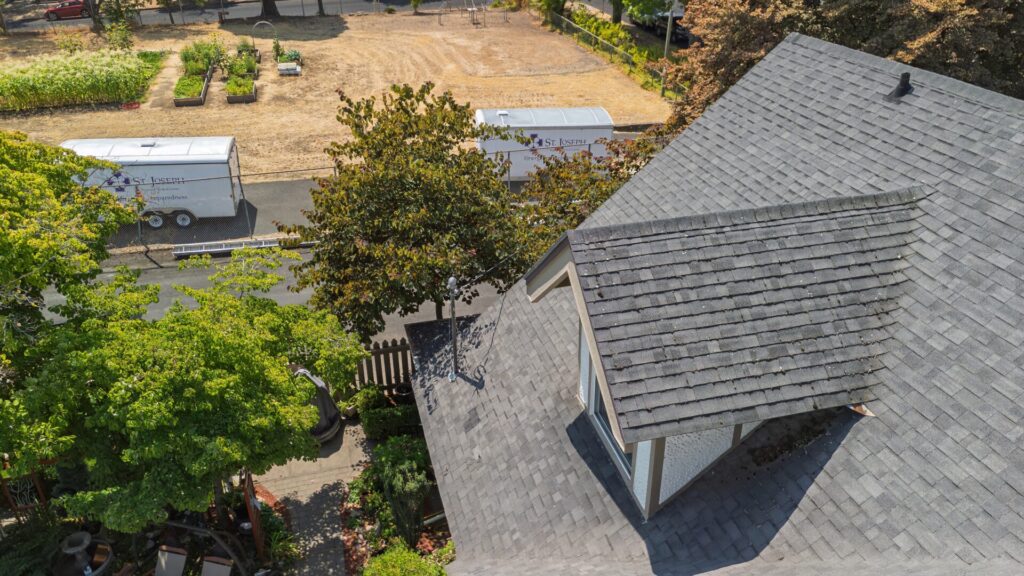
Moss and Algae Growth Caused by Tree Shade
Moss and algae growth is one of the more visually obvious signs that trees are affecting your roof, and both thrive in exactly the conditions a heavy tree canopy creates.
How Shade Creates Ideal Conditions for Moss and Algae
Moss and algae need two things to take hold: moisture and shade. Trees provide both consistently. When a roof sits under a dense canopy for much of the day, it does not receive the UV exposure and airflow needed to stay naturally dry. That persistent moisture creates a surface where biological growth can establish itself season after season. Across the Lewiston-Clarkston, Moscow-Pullman, and Coeur d’Alene-Spokane corridors and surrounding areas, this is especially common on north-facing roof slopes that already receive less direct sunlight throughout the year.
Why Moss Can Damage Shingles
Moss is not just a cosmetic problem. Its root structures physically penetrate the surface of shingles, working into the granule layer and the asphalt beneath. Over time, this lifts shingles at the edges, creating gaps where wind and water can enter. Moss also holds continuous moisture against the roof surface, which accelerates the breakdown of roofing materials. A moss-covered roof has been under sustained stress for some time, and the underlying damage typically runs deeper than the surface appearance suggests.
How to Protect Your Roof From Tree Damage
Understanding the risk matters, but taking action to reduce it is what actually extends the life of your roof.
Trimming Overhanging Branches
The most direct way to reduce trees damaging your roof is to keep branches trimmed back from the roofline. A good general guideline is to maintain at least six to ten feet of clearance between overhanging branches and your roof surface. This reduces the chance of physical contact, limits debris accumulation, and allows more sunlight to reach the roof for natural drying. For large trees or high canopy work, a certified arborist is the appropriate professional for the job.
Regular Roof Inspections
Scheduling a professional roof inspection is one of the most practical steps a homeowner can take. At Russell Quality Roofing, we offer free standard residential roof inspections throughout Northern Idaho and Eastern Washington and surrounding areas. An inspection allows us to identify early signs of tree-related wear, including granule loss, debris accumulation in valleys, moss growth, and branch contact damage, before those conditions develop into larger problems. We document our findings with photo and video as needed so you have a clear, accurate picture of your roof’s current condition.
Keeping Gutters and Roof Surfaces Clear
Keeping gutters and roof surfaces clear of debris directly affects how long your roof performs. How often this needs to happen depends on how many trees surround your home and what types they are. Pine trees and deciduous trees with heavy leaf drop require more frequent attention than species that shed less. Making debris removal a regular seasonal habit rather than an occasional task can extend the life of your roofing system in a meaningful way.
When Tree Damage Warrants a Professional Evaluation
Signs of Tree-Related Shingle Damage
Not every sign of tree damage is obvious from the ground, but there are things homeowners can watch for. Granule loss concentrated in specific areas, shingles that appear curled or lifted at the edges, dark streaking that suggests algae or sustained moisture exposure, and visible debris accumulation in valleys or along the lower eaves are all worth taking seriously. If you notice any of these conditions, scheduling an inspection before the situation progresses is a sound decision.
When to Call a Roofing Professional
If your roof has experienced prolonged tree contact, storm damage from a falling limb, or visible moss growth that has been present for more than one season, a professional evaluation is the right next step. At Russell Quality Roofing, we serve homeowners across the Lewiston-Clarkston corridor, the Moscow-Pullman corridor, and the Coeur d’Alene-Spokane corridor and surrounding areas, and we approach every inspection with the same goal: to give you an honest, accurate assessment of what your roof needs. Trees damaging your roof is a gradual process, which means early attention almost always leads to better outcomes. We are licensed, bonded, and insured, and our goal in every conversation is to give you the information you need to make a confident decision about your home. Contact us today for a free estimate.