What a Water Stain on the Ceiling Usually Means
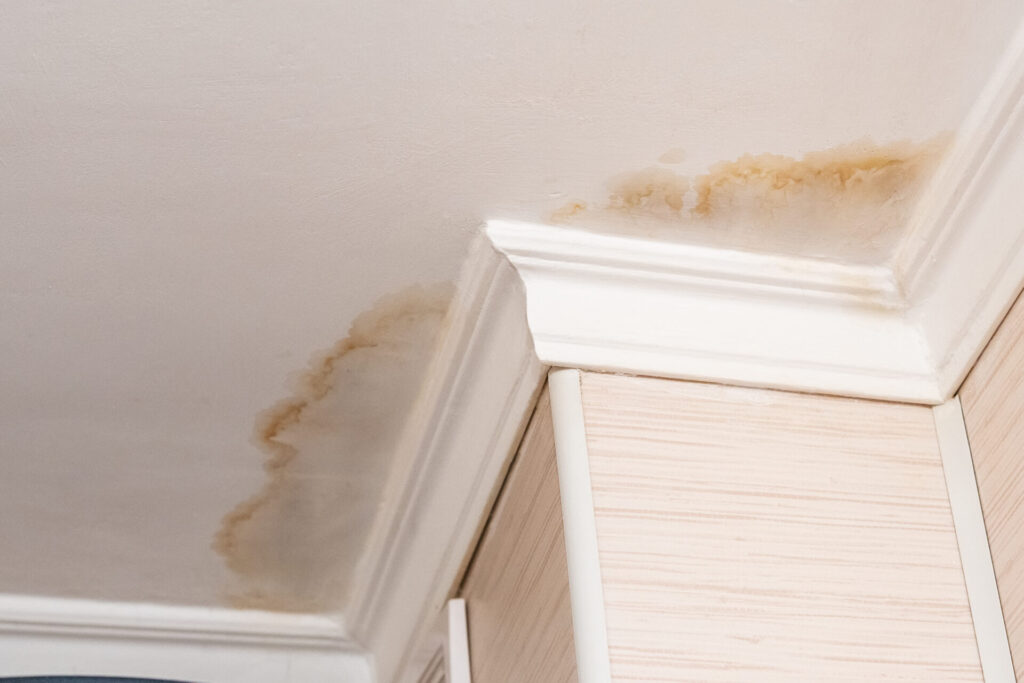
A water stain on your ceiling is one of the most common ways a roofing problem announces itself. The discoloration, typically yellow or brown, signals that moisture has worked its way through your home’s protective layers and traveled through structural components before settling on the ceiling surface. Many homeowners notice the stain and wonder whether the cause is the roof, a pipe, or something else entirely.
The honest answer is that a ceiling stain alone cannot tell you where the water came from. What it can tell you is that something needs attention. Understanding the most common sources of ceiling moisture helps you make a smarter decision about who to call and what to inspect first.
How Water Travels Through Your Home
Water rarely drips straight down from the source to the stain. It seeps through roofing materials, insulation, drywall, and framing before it becomes visible. Gravity pulls it downward, but it also spreads laterally along beams, pipes, and structural components. This means the stain on your ceiling could be several feet away from the actual point of entry. Focusing repairs on the stained area without identifying the root cause will not solve the problem.
Roof Problems That Cause Ceiling Water Stains
Roof leaks are among the most common causes of ceiling water stains, and they are also among the most important to address quickly. Left unattended, a roof leak can cause structural damage to decking and framing, encourage mold growth, and lead to a much larger and more costly repair or replacement down the road.
Damaged or Missing Shingles
Roof shingles are your home’s first line of defense against rain, snow, and seasonal storms. When shingles are cracked, curling, or missing, water can penetrate beneath them and work its way into the home, leading to water damage that is often far more extensive than what is visible on the ceiling surface. Asphalt shingles that have lost significant granules are also vulnerable, as granule loss accelerates weathering and reduces the shingle’s ability to shed water effectively. Damaged shingles left unaddressed allow moisture to reach the decking, which can compromise the roof’s structural integrity over time.
Repairing a small area of damaged shingles can be a cost effective solution when the damage is genuinely isolated and the roof is not approaching the end of its lifespan. In those cases, repairing the affected area promptly prevents the problem from spreading and protects the underlying material from further exposure. That said, repairing shingles on a roof that is already showing widespread wear often becomes a cycle of diminishing returns. When the age of the roof and the extent of visible deterioration point toward broader failure, shingle replacement across the full roof is typically the smarter investment.
Russell Quality Roofing will always give you a clear, honest assessment of what your roof actually needs. If minor repairs can resolve the issue, we will tell you that. If a full replacement is the right call, we will explain why with documented findings to back it up. Every full replacement begins with a complete tear-off, removing all existing roofing materials down to the deck. This allows us to inspect sheathing for water damage and replace any deteriorated wood before nails are ever set for the new system.
Flashing Failures
Flashing seals the intersections between roofing materials and penetrations like chimneys, skylights, and vents. When flashing corrodes, separates, or is not properly installed, it creates an opening for water to enter the attic and eventually reach your ceiling. Flashing issues are a common source of roof leaks that are easy to miss without a professional inspection.
Roof Vent and Pipe Boot Leaks
Roof vents and pipe boots are frequent leak points when their seals degrade over time. Water can enter around these penetrations and travel into the ceiling well below where the breach actually occurred. These areas are carefully checked during every Russell Quality Roofing inspection.
Ice Dams
In Northern Idaho and Eastern Washington and surrounding areas, ice dams are a real seasonal concern. Ice dams form when heat escaping from the home melts snow on the upper portion of the roof, and that water refreezes near the eaves. This ice buildup can force water under shingles and into the home. Adequate attic ventilation is a key factor in preventing ice dams, and ice and water shield installation in vulnerable areas provides an additional layer of protection.
Problems That Are Not Roof Related
Not every ceiling stain points to a roofing problem. Before assuming the worst about your roof shingles, it is worth ruling out other common sources of moisture intrusion. Identifying the underlying issues correctly from the start saves time and prevents unnecessary work on the wrong part of the home.
Plumbing Leaks
Plumbing leaks are one of the most common non-roof causes of ceiling water stains. Leaking pipes above the ceiling, particularly in bathrooms and kitchens, allow water to travel through framing and drywall before appearing as a stain on the ceiling surface below. Supply lines, drain connections, and toilet seals are all plumbing components that can develop leaks without obvious warning signs at first. If the stained area is directly below a bathroom fixture or kitchen sink, plumbing should be your first suspect before calling a roofer. A localized stain with no connection to rainfall is also a strong indicator that plumbing issues rather than roof damage are the source.
Repairing the plumbing source is the only way to stop that category of water stains from recurring. Addressing the ceiling cosmetically without fixing the underlying issues will not protect your home and will lead to the problem returning.
Attic Condensation
High humidity in a poorly ventilated attic can lead to condensation that accumulates on framing and eventually reaches ceiling surfaces. This is more common in older homes and in climates with significant temperature swings. Proper attic ventilation helps prevent condensation issues and protects both the roof system and the interior of the home.
HVAC System Leaks
Heating and cooling systems with clogged drain lines or faulty drip pans can leak water that travels to ceiling surfaces. Stains near HVAC equipment or supply vents may indicate a system issue rather than a roofing problem.
Signs the Water Stain Is Coming From the Roof
A few patterns suggest the source is roof-related rather than interior.
Stains That Appear or Worsen After Rain or Snow
If staining develops or increases following heavy rainfall or a significant snowmelt event, a roof leak is the most likely explanation. It is worth noting that an active leak can often be traced to its source during an inspection, but an older or dormant leak can be considerably harder to identify. Visible moisture, active dripping, or staining that worsens in real time are the clearest indicators of an ongoing issue. We assess observed conditions and recommend the appropriate course of action based on what we can document at the time of inspection.
Multiple Stains in Different Areas
Several stains appearing in different ceiling locations can indicate widespread roof damage, such as multiple areas of shingle failure, deteriorated flashing, or a compromised underlayment.
Active Dripping or Wet Spots
Visible dripping or a wet ceiling surface requires immediate attention. Active moisture intrusion accelerates structural damage and increases the risk of mold growth. This should not wait.
Why Ignoring Roof Leaks Makes the Problem Worse
Roof leaks that go unaddressed tend to compound. What starts as water staining can progress into damaged roof decking, weakened framing, and mold growth behind walls and ceilings. Mildew can also develop in persistently moist environments. These issues become significantly more expensive to address the longer they are allowed to continue.
Seasonal storms in Northern Idaho and Eastern Washington and surrounding areas put roofs under regular stress. Roofs that already have damaged shingles, deteriorating flashing, or aging underlayment are at heightened risk of accelerated water intrusion after a significant weather event.
When to Schedule a Professional Roof Inspection
If you notice ceiling water stains, particularly after rain or in the winter months, a professional roof inspection is a practical next step. Russell Quality Roofing provides free standard residential roof inspections throughout the Lewiston-Clarkston corridor, Moscow-Pullman corridor, and Coeur d’Alene-Spokane corridor and surrounding areas. Our team is licensed, bonded, and insured, and we perform detailed evaluations that include photo and video documentation as needed. Please note that while standard roof inspections are provided at no charge, if roof triage is required, meaning temporary measures to prevent water from gaining access to the structure until a permanent repair can be made, there is a charge for that service. We will always communicate clearly about what is needed and why before any work proceeds.
How Roof Inspections Identify Leak Sources
Our inspections cover roof shingles, flashing, vents, pipe boots, and other common failure points. When an active leak is present, we work to trace it to its source rather than assuming the entry point is directly above the stain. It is important to understand that active leaks are generally traceable, while older or dormant leaks can be significantly more difficult to pinpoint without visible moisture or ongoing water intrusion. Our assessments are grounded in what we can observe and document, and we will always be straightforward with you about what we find and what we can determine.
If a repair can resolve the issue, we will tell you that clearly. If the roof’s age and overall condition make shingle replacement across the full roof the smarter long-term investment, we will explain why with documented findings to support the recommendation.
What a Full Roof Replacement Involves
When shingle replacement across the entire roof is the right call, here is what the process looks like with Russell Quality Roofing.
Every replacement begins with a complete tear-off of all existing roofing materials. We remove down to the deck, which allows us to inspect the sheathing and address any deterioration before the new system goes on. If sheathing needs replacement to meet code, that is identified during this stage and handled as a change order item.
We install Owens Corning UDL 50 underlayment on every job. Around October 1 each year, we switch to a flexible ice and water shield in cold-weather-prone areas to ensure proper adhesion and performance through the winter months. All installation follows Owens Corning manufacturer specifications. Our installers are MBCI-certified for metal roofing installation when that system is selected.
Final cleanup includes a magnetic sweep to remove stray nails to the best of our ability.
Protecting Your Home Starts With the Right Assessment
A ceiling water stain is a signal worth taking seriously. Whether the source turns out to be the roof, a pipe, or the HVAC system, identifying the root cause before it becomes a larger problem protects both your home and your investment. Russell Quality Roofing has been serving homeowners across Northern Idaho and Eastern Washington and surrounding areas since 2007, and we are here to help you understand your options clearly and honestly. Request your free estimate today!

AWARD WINNING PRODUCE
Order Online
Lorem ipsum dolor sit amet, consectetur adipiscing elit. Pellentesque vestibulum aliquam cursus. Mauris molestie aliquam urna. Curabitur nec eleifend risus. Integer eget libero sed elit pharetra ultricies eu in augue. Integer eget libero sed elit pharetra ultricies eu in augue.
BROWSE OUR ITEMS
