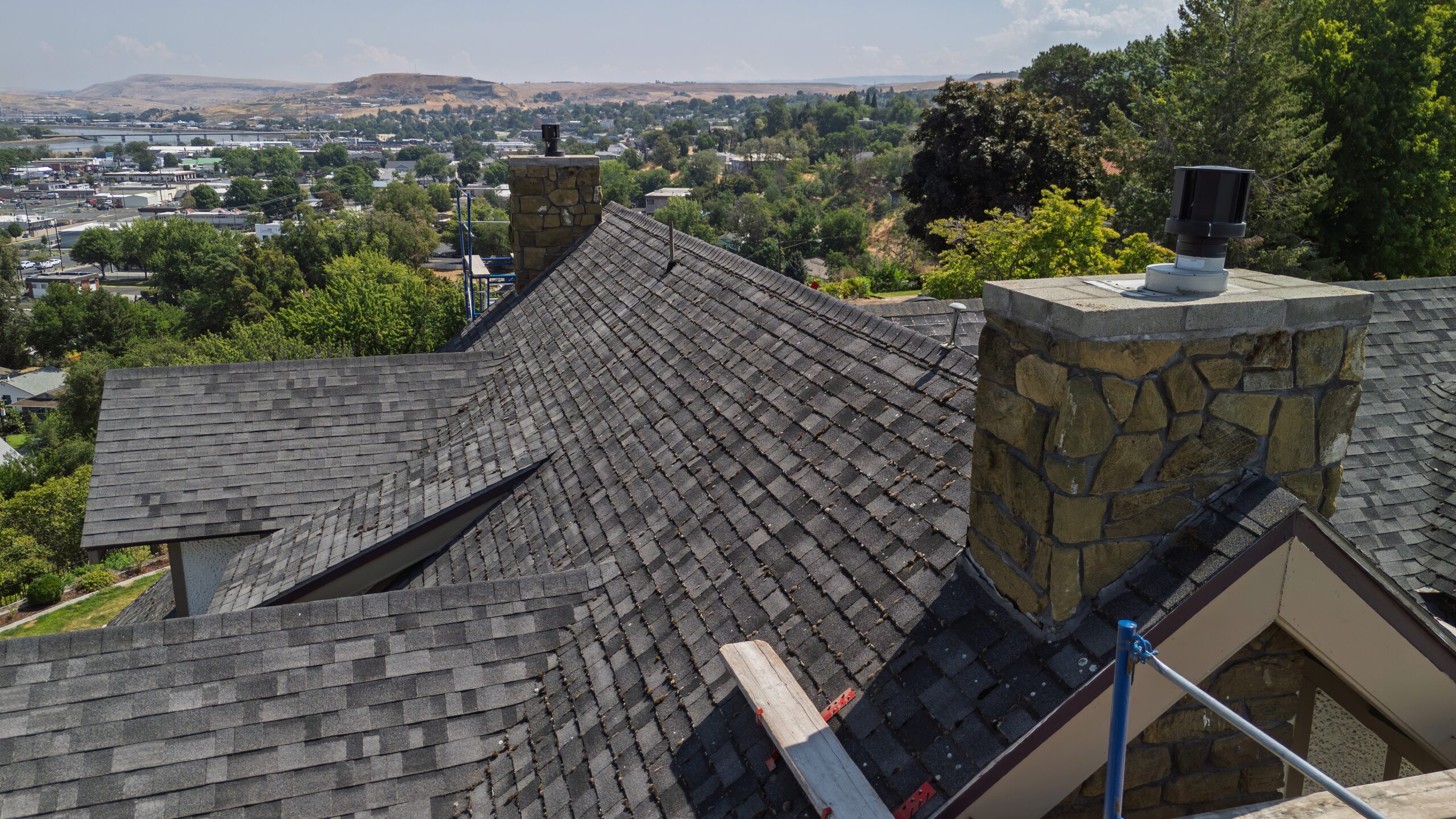
You noticed it from the driveway. Green fuzz along the north side of the roof, maybe a dark streak running down from the ridge, and now you’re wondering whether it’s cosmetic or the start of something expensive.
Both, depending on which one you’re looking at. Moss and algae are two different organisms causing two different problems, and homeowners across the Inland Northwest routinely treat them as the same thing. They’re not.
Moss and Algae Are Not the Same Problem
Those black or brown streaks running down a roof plane are usually blue-green algae. According to the Asphalt Roofing Manufacturers Association (ARMA), algae discoloration typically begins as small spots that spread into the streaks visible on so many roofs across the country, and coastal or humid climates create the most favorable conditions. The Inland Northwest isn’t coastal, but our wet winters manage fine on their own. The important part: algae is an appearance problem. It doesn’t eat your shingles.
Moss is a plant, and that changes everything. It develops a root system that grips the shingle surface, and unlike algae, it holds water against the roof for days after the rain stops. A moss covered roof isn’t just discolored, it’s wet and being physically pried apart in slow motion. If you remember one thing from this article: algae is curb appeal, visible moss is roof damage in progress.
Why Inland Northwest Roofs Grow Moss
Moss needs three things: shade, moisture, and something organic to feed on. Homes from Lewiston and Clarkston through Moscow and Pullman and up into Spokane and Spokane Valley tend to supply all three.
North-facing roof planes get less direct sunlight and stay wet longer than a south-facing plane that dries within hours, which is why moss growth is nearly always heaviest on the north and northeast exposures. Overhanging tree branches shade the roof and drop debris continuously, and pine and fir needles are especially good at wedging into shingle joints and staying there. That debris, decomposing leaves and dust, provides the nutrient-rich bed where moss spores land and germinate. Moss doesn’t colonize clean, dry, sunlit shingles. Our long, damp winters accelerate the whole process, which is why local roofs often look considerably worse in March than they did the previous September.
Shingle age matters too. Asphalt shingles made with organic felt mats haven’t been manufactured since around 2008, but plenty are still on Inland Northwest homes. As the volatile compounds dissipate over time, the cellulose mat dries out and becomes more absorbent, and near the end of their life organic shingles can hold considerably more moisture than modern fiberglass-mat shingles, according to InterNACHI’s roof inspection guidance. A more absorbent surface gives moss roots more to grip.
Does Roof Moss Cause Damage?
Yes, and it doesn’t stay a surface issue for long.
- It lifts the leading edges. Moss growing along the bottom edge of a shingle course pushes those edges up, letting water travel sideways and underneath. Lifted edges also give wind something to grab, and shingle blow off becomes a real risk during our fall and spring wind events.
- It traps moisture against the deck. Materials that trap moisture for months cause wood rot, and deck rot isn’t visible from the ground or the attic in its early stages.
- It blocks proper water drainage. Thick moss in valleys and eaves diverts water, and that water often finds a route under the shingles rather than into the gutter.
- It attracts pests. A permanently damp, decomposing mat draws insects, which don’t improve the structural integrity of anything above them.
- It ages the house. A clean roof genuinely affects curb appeal and how a property shows to buyers.
Ignoring moss long enough turns a cosmetic complaint into decking repairs, and that’s a considerably more expensive Saturday than prevention would have been.
How to Safely Remove Moss From a Roof
Never use a pressure washer
ARMA is unambiguous: high-pressure washing strips the protective granules and very likely leads to premature failure of the roofing system. The same warning applies to aggressive scrubbing, wire brushes, and scraping with a putty knife.
Skip the improvised chemistry
Vinegar mixes and dish soap solutions circulate widely online, but manufacturer guidance doesn’t endorse them, results are inconsistent, and some can damage roofing materials or affect warranty coverage.
What manufacturers recommend: a household bleach solution diluted with water, mixed at roughly equal parts laundry-strength liquid chlorine bleach and water, dispersed gently across the roof rather than scrubbed in. Let it dwell 15 to 20 minutes, then rinse with a garden hose at ordinary pressure. Don’t let it dry on the roof before rinsing. Algae fades and washes away with subsequent rains, and living moss loosens over the following weeks. Dead moss can be cleared later with a leaf blower or soft brush, always working down the slope.
What to Know About Chemical Moss Killers
Commercial products are formulated to kill moss at its roots rather than just burning the visible surface, and many leave residual protection that can prevent regrowth for a season or more. The tradeoffs are important to consider: mossicides must be applied according to label instructions, and they can harm aquatic life if allowed to run into a storm drain. Zinc and copper-based products carry different environmental cautions than bleach. No treatment permanently eliminates moss. Chemical treatment kills what’s there and buys you time; only changing the conditions on the roof keeps it from coming back.
One note about us: Russell Quality Roofing is a roofing contractor, not a roof cleaning company. We don’t offer roof cleaning or soft washing services. What we do is inspect the roof underneath the moss and give you an answer about whether the shingles still have life left in them.
When You Should Not Remove Moss Yourself
Professional help is advisable for extensive moss coverage, any steep-pitch roof, anything above a single story, and shingles already brittle and shedding granules. Professional soft washing applies the same chemistry with low-pressure equipment that relies on the solution rather than water force. If you hire this out, confirm the company uses low pressure, not a pressure washer, and ask what they do to protect your landscaping. If the roof is old enough that you’re weighing cleaning against replacement, get it inspected first.
How to Prevent Moss Growth on a Shingle Roof
Proper maintenance is cheaper than removal every time.
Trim overhanging trees. This increases sunlight exposure and airflow across the roof surface and cuts the debris load at the source, the single highest-impact thing most homeowners can do.
Keep the roof surface clear. Clear leaves and needles with a leaf blower as part of regular maintenance, directing air down the slope. No organic debris means no nutrient bed for spores.
Keep gutters clean. Clogged gutters back water up onto the lower shingle courses and keep that area permanently damp. Make sure an upper roof doesn’t drain directly onto a lower plane, extend that downspout into the lower gutter instead. If your gutters are past saving, Russell Quality Roofing installs continuous gutters formed on-site in the Lewis Clark Valley and surrounding areas.
Consider zinc or copper strips. Installing strips near the ridge is a recognized preventive measure. When it rains, trace metal particles wash down the roof plane and create a surface moss and algae struggle to colonize. Coverage is limited to what the runoff actually reaches, and strips are far better at discouraging future growth than killing an established colony. Ask your roofing contractor whether it makes sense for your roof geometry.
Choose the right shingle next time. Owens Corning shingles with StreakGuard Algae Resistance Protection use copper-containing granules to inhibit algae growth, and qualifying lines carry an Algae Resistance Limited Warranty when installed with approved hip and ridge products.
Look at the roof twice a year, spring and fall, for new moss at the eaves and in valleys, lifted edges, and granule accumulation in the gutters. Catching moss as a patch is a very different project from catching it as a carpet.
When Moss Means You Need a New Roof
Sometimes moss is the symptom rather than the disease. If your roof is well into its service life, moss is often growing because the shingles have already lost enough granule coverage to hold water, in which case cleaning buys appearance, not years. That’s what a roof inspection is for. We look at granule loss, curling, leading edges, flashing, attic ventilation, and soft spots that suggest moisture has been sitting where it shouldn’t. If the roof has life left, we’ll say so. If it doesn’t, you’ll understand why. Every roof we replace includes a complete tear-off of the existing materials, no exceptions, and on a roof that’s been living under moss, seeing the deck is the entire point.
Common Questions About Moss on Roof Shingles
Is moss on my roof actually damaging it, or just ugly?
Moss causes real damage: it lifts shingle edges, traps moisture against the deck, and blocks drainage. Algae, the black streaking, is cosmetic and doesn’t affect shingle performance.
Will pressure washing hurt my shingles?
Yes. It strips protective granules and shortens the roof’s lifespan, and manufacturers warn it can cause premature failure. It can also complicate a warranty claim.
Do zinc strips really work?
They help, within limits. Metal particles washing down the roof inhibit new growth in the area the runoff reaches, making them a good preventive tool and a poor removal tool.
How often should I inspect for roof moss?
At least twice a year, spring and fall, plus after any significant wind event.
Can moss removal void my roof warranty?
Improper removal can complicate a claim. Pressure washing, abrasive scrubbing, and harsh chemicals outside manufacturer approval are the usual culprits. ARMA publishes its maintenance guidance publicly through its technical bulletins.
Get an Honest Look at What Is Under the Moss
Russell Quality Roofing has served the Inland Northwest since 2007. We are licensed, bonded, and insured, an Owens Corning Platinum Preferred Contractor ranked among the top one percent of roofing contractors nationally, with 100 percent ratings on Owens Corning inspections for more than ten years.
We serve Lewiston and Clarkston, Moscow and Pullman, Spokane and Spokane Valley, Coeur d’Alene, Post Falls, Liberty Lake, Hayden, and surrounding areas.
If moss has you wondering whether your roof needs cleaning, repair, or replacement, the useful first step is finding out which one. Schedule a free roof inspection at (208) 791-5252 or through our free estimate page, and we’ll tell you honestly what your shingles have left.
Russell Quality Roofing: Built on Trust, Backed by Expertise.