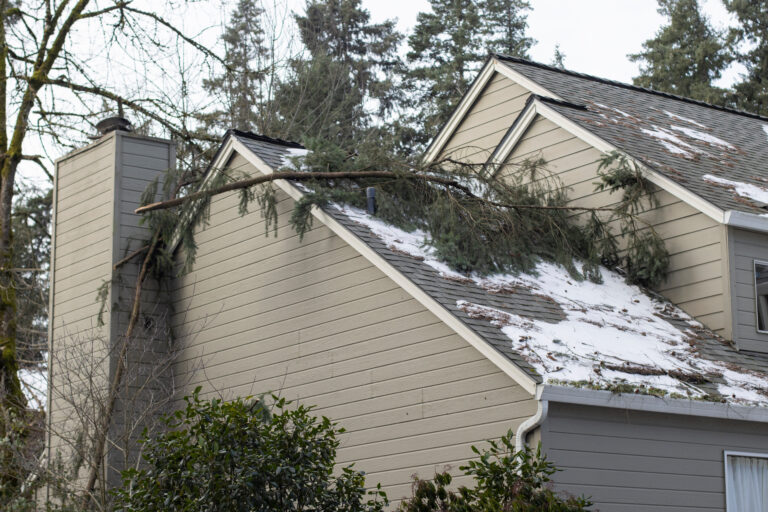
Most people do not plan a roof replacement. They react to an issue springing up out of the blue. A stain shows up on the ceiling in February, or a windstorm peels back a section of shingles, and suddenly a project that deserved months of thought has to happen in a week.
Search roof replacement Coeur d’Alene and you will find no shortage of companies willing to be there tomorrow. What is harder to find is a clear picture of what the process actually involves, what it should cost, and when to start.
It does not have to go that way. A roof replacement in Coeur d’Alene goes far better when it starts as a question rather than an emergency, and the homeowners who get the best result are usually the ones who started asking that question a year before anyone climbed a ladder.
Here is what that timeline looks like, from the first inspection to the final city sign-off.
Why Roofs in Kootenai County Age on Their Own Schedule
Roof lifespan estimates published for the national market do not translate fully to Northern Idaho. Our roofs work harder, and the building code says so.
The City of Coeur d’Alene’s design criteria call for a roof snow load of 40 pounds per square foot and a ground snow load of 60 pounds per square foot. Post Falls uses 40 psf roof and 56 psf ground. Compare that to the City of Spokane, just 35 miles west, where the adopted ground snow load is 39 pounds per square foot with a minimum roof snow load of 30 psf. Coeur d’Alene homes are engineered to carry substantially more weight than homes in Eastern Washington, and that difference is not academic when a heavy wet snowfall parks itself on your roof for three weeks.
Local records tracked since 1895 put normal seasonal snowfall for Coeur d’Alene at roughly 69.8 inches. Add repeated freeze and thaw cycles, spring and summer thunderstorms that regularly bring hail through Kootenai County, strong winter wind events, summer UV, and long stretches of damp shoulder season, and you get a roof that ages through several different kinds of stress in a single year.
That combination shows up in a few common ways:
- Ice dams form when heat escaping into the attic melts snow at the ridge, and that meltwater refreezes at the colder eave. The water backs up under the shingles. The root cause is almost always ventilation and insulation, not the shingles themselves.
- Freeze and thaw cycling works on flashing, sealant, and any place the roof changes direction. Valleys and penetrations tend to fail first.
- Hail and wind damage frequently is not visible from the driveway. Bruised shingles and lost granules read as normal wear from ground level.
- Trapped moisture rots roof decking quietly, and homeowners often do not learn about it until tear-off day.
You should be watching the condition of your roof, not the calendar.
How Long Should a Roof Last in North Idaho?
Honestly? Less time than the same roof would last in a milder climate. Snow load, moisture exposure, and freeze and thaw cycling all shorten service life, which is why material selection matters more here than it does in a place with gentle winters and dry summers.
Asphalt Shingle Roof
The old rule of thumb about asphalt shingles giving you one to two decades is based on technology that has moved on considerably. Owens Corning architectural shingles carry a 50-year product warranty, and that warranty is a more useful benchmark than a generic lifespan number. What actually determines how long yours lasts is the grade of shingle, the quality of the underlayment assembly beneath it, whether the attic is properly ventilated, and whether the installation followed manufacturer specifications.
Standing Seam Metal Roof
Metal is the long-horizon option. The commonly cited service life range across the metal roofing industry is 40 to 70 years, depending on the base metal, the coating system, and installation quality. In our climate, metal is beneficial because it sheds heavy snow, resists high wind, and requires less maintenance than asphalt over the decades.
Either way, installation quality is not something to overlook. In an area with snow loads and dozens of freeze and thaw cycles a year, a roofing system installed a little bit wrong will fail early no matter how good the materials were on the pallet. High quality workmanship is what turns a good product into a roof that reaches the top of its range instead of the bottom.
Twelve to Six Months Out, Start With an Inspection
The right first move is a free roof inspection while nothing is urgent. When there is no leak dripping into a bedroom, you get to make a decision instead of a purchase.
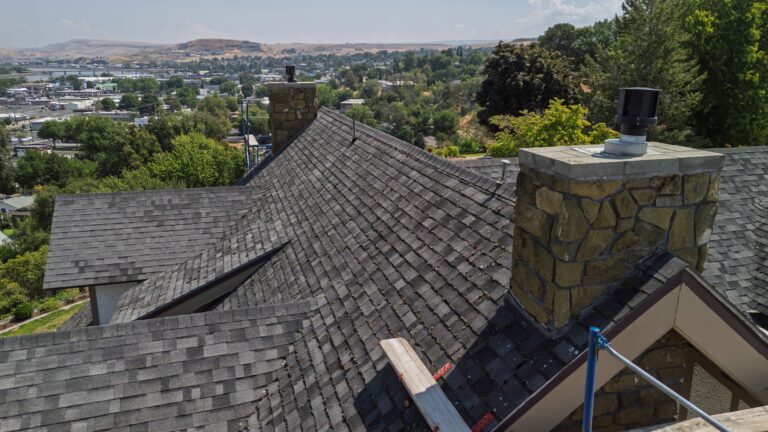
An inspection covers more than the shingle surface. Our team looks at granule loss, cupping and curling, flashing at chimneys and sidewalls, valley condition, penetrations and boots, the state of the eaves, and attic ventilation, since ventilation is the single most common contributor to ice dams and premature deck rot in this climate. We document conditions with photos and video as needed so you can see what we saw.
One note about leaks. Active leaks can generally be traced to their source during an inspection. Older or dormant leaks, with no visible moisture and no ongoing water intrusion, are considerably harder to pin down. Any roofing contractor who promises to find every leak, regardless of age or activity, is promising something the trade cannot reliably deliver.
This is also the stage where repair versus replacement gets settled. If the roof is relatively young and the problem is isolated, roof repairs are the better call, and we will tell you so. For an aging roof with recurring leaks, widespread wear, or storm damage across multiple slopes, a full replacement usually costs less over the life of the home than a run of patches.
Schedule a free roof inspection and give yourself the option of planning ahead.
Six to Three Months Out, Get Your Estimate and Ask More In-Depth Questions
Once replacement is on the table, get numbers early. Roofing is measured per square, which equals 100 square feet of roof surface, not per square foot. When you compare estimates, make sure everyone is speaking the same language.
What usually drives the pricing on a roof replacement in Coeur d’Alene:
- Total squares and the complexity of the roof, including valleys, dormers, and penetrations
- Pitch, since steeper roofs require more staging and slow the work down
- Access, including landscaping, driveway space, and how close we can stage materials
- The number of existing roofing layers to remove
- The condition of the roof decking underneath
- The roofing system and service options you choose
We provide a single, project-based estimate rather than a labor and material breakdown. Our quotes include removal of one layer of existing roofing. If we uncover a second layer or if the exposed deck has damaged sheathing, it has to be replaced to stay in code. Coeur d’Alene’s re-roof requirements call for replacement of dry rot or fungus damaged wood, along with new Class A or B roofing, flashing, and ventilation of enclosed spaces. No contractor can promise there will be no surprises once a roof is opened up in this climate.
Fair pricing, to us, means the number reflects the work your roof actually needs, and that any change to it gets explained before it happens rather than after.
Want a starting range before you book anything? Our roof replacement cost estimator gives you a realistic budget window in a couple of minutes.
Questions Worth Asking Every Contractor You Meet
- Are you registered in Idaho? Idaho does not issue a trade-exam roofing license. It runs a registration system through the Division of Occupational and Professional Licenses under the Idaho Contractor Registration Act, and any contractor performing work with an aggregate price of $2,000 or more must be registered. You can verify status yourself through DOPL’s online services portal.
- Are you licensed, bonded, and insured? Ask for proof of general liability and workers’ compensation, not a verbal yes.
- Do you work in this jurisdiction? Qualified roofers who work Kootenai County regularly know the municipal building codes and the local snow load requirements without looking them up. Ask a code question and listen to how fast the answer comes.
- What is your combined experience with the specific system I am choosing? Shingle experience and standing seam metal experience are not interchangeable.
- Who pulls the permit, and is the fee inside the quote? Get it in writing.
- Who is doing the work, and how is quality controlled? Plenty of roofing companies use subcontractors. That is normal in this trade. What matters is whether those crews are long-standing, vetted partners working to a defined standard with oversight and inspection, or whether the work is simply farmed out. Ask about the quality control program specifically.
- What does the warranty coverage actually include, and is it transferable?
One Red Flag to Lookout for
If a contractor offers to waive, absorb, or discount your insurance deductible, walk away. Your deductible is a contractual obligation between you and your insurer. For a contractor to cover it, the claim generally has to be inflated somewhere, and that exposes you, not just them. There is no version of that arrangement that leaves you better protected.
Choosing a Roofing System Built for a North Idaho Winter
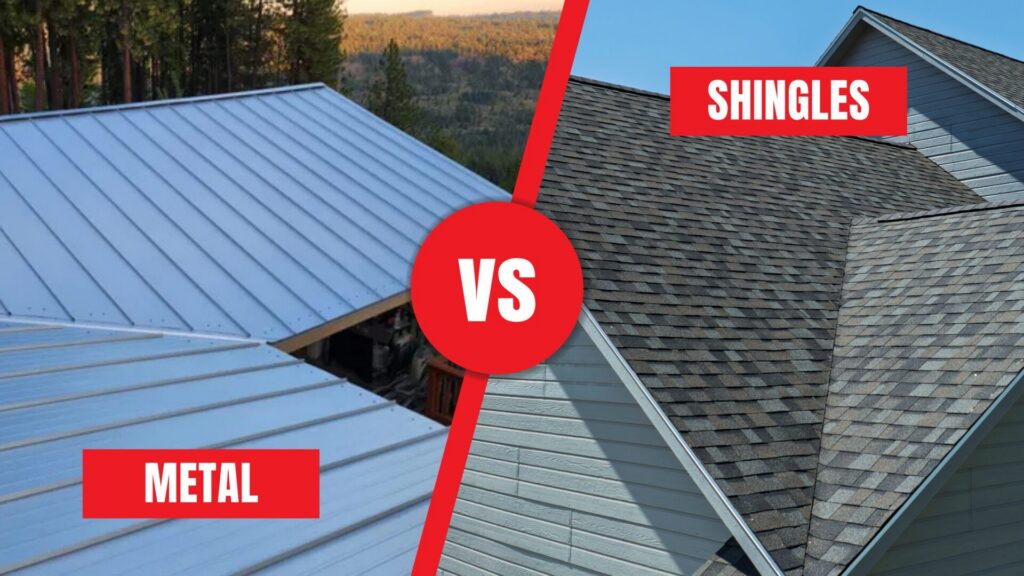
There are two systems we install, and the right one depends on your house, your slope, and how long you plan to stay.
Owens Corning Architectural Shingles
These are the workhorse of residential roofing across Kootenai County. Modern architectural shingles handle wind, thermal cycling, and snow load well, and Owens Corning offers a diverse line to fit different budgets and looks. Russell Quality Roofing is an Owens Corning Platinum Preferred Contractor, ranked among the top one percent of roofing contractors nationally, and we have earned 100% ratings during Owens Corning inspections for more than ten years. We are also a Diamond level member of the Certified Contractors Network, a separate organization focused on business practices across sales, production, and operations.
Standing Seam Metal Roofing
Metal sheds heavy snow effectively, resists high wind, and requires less maintenance than asphalt over its service life. It is a strong fit for homes with clear snow-shedding paths and for owners planning to stay put for decades. Our superintendents are MBCI certified for metal roofing installation, and MBCI is one of several manufacturers we work with. Metal roofing warranties vary by manufacturer and system, so they should never be described using Owens Corning shingle warranty terms.
Low-Slope Residential Sections
For the flat or low-slope portions some homes have, we install the Owens Corning DeckSeal 3-ply system. Flat roofing is not our primary focus, but we handle it when a home needs it.
What goes underneath matters just as much as what you see. We exclusively use Owens Corning UDL 50 underlayment year-round, because modern underlayment is engineered to perform across a wide temperature range. Ice and water shield goes into the areas most prone to leaks, meaning eaves, valleys, and penetrations. And ventilation gets addressed as part of the system rather than as an afterthought, since that is where ice dam problems begin.
Three to One Months Out, Permits, Financing, and Insurance
Permits
Coeur d’Alene requires a re-roof permit, and most re-roof, siding, mechanical, and plumbing permits can be obtained over the counter. Post Falls requires one too, with a $150 flat fee for residential re-roofs. Properties in unincorporated Kootenai County go through the county’s Building Division instead. Confirm in writing who is responsible for pulling it. An unpermitted roof has a way of resurfacing years later, at a sale or during a claim.
Financing
Financing is available through third-party finance companies for approved applicants. Russell Quality Roofing does not provide the financing itself. Current programs include six months same as cash, with rates from 9.99% to 11.99% on approved credit. For many homeowners that puts a new roof in the range of a monthly car payment. You can review the details on our financing page.
Insurance
If storm damage is involved, understand the division of labor clearly. Russell Quality Roofing does not process or manage insurance claims. What we do is inspect the roof, document conditions, and provide the information your insurer asks for. You contact your insurance company and follow their claim process. Check your policy for the filing window as well, since many Idaho homeowners policies allow 12 months from the date of loss to file a storm damage claim, and that clock starts whether or not you have noticed the damage.
Installation Week, What Happens
Most residential roof replacements take one to three days. Steeper pitches, complex rooflines, and larger homes take longer.
Day one starts with a full tear-off. Not sometimes, not if required. Every roof replacement we perform includes complete removal of the existing roofing materials, because it is the only way to see the deck and the only way to know what you are building on. Tear-off and disposal are handled per local requirements.
Then the deck gets inspected. Any damaged or rotted sheathing is replaced to meet code. This is the change order conversation we flagged during the estimate, and it happens in daylight with you in the loop.
Next comes the underlayment assembly. Ice and water shield at eaves, valleys, and penetrations. UDL 50 underlayment across the field. Flashing detailed at every transition. Ventilation addressed.
Then the roofing system goes on following applicable manufacturer specifications. Crews are tied off with safety lines anchored at the ridge for the duration of the work.
Cleanup closes the job. Final cleanup includes a magnetic sweep to remove stray nails to the best of our ability, plus a walk of the perimeter and landscaping. Your city or county inspector then performs the final inspection.
Communication is the aspect of this that homeowners tell us matters most. Knowing who is arriving, when the dumpster shows up, and what we found under the shingles is the difference between a stressful week and a well-run project. Our process page walks through how we manage it.
Can You Replace a Roof Here in Winter?
Yes, and this is where a lot of Coeur d’Alene homeowners have some misinformation.
Cold weather does not prevent shingle installation. Modern shingle technology begins bonding on the overlap, and work proceeds in cold conditions as long as the deck is dry and ice-free. What actually stops a crew is rain, unsafe wind, or ice on the deck. Those are non-negotiable, and ice specifically prevents shingles from laying perfectly flat, which can compromise performance as temperatures cycle.
Around October 1, we switch to a flexible ice and water shield for cold-weather installs and stay with it through roughly March. It stays pliable at low temperatures and holds better in winter conditions, while the standard product is too aggressive in summer heat. The main underlayment stays the same year-round. Many roofers do not bother making that seasonal switch. We do, and it is a large part of why we can replace roofs safely through the winter instead of pushing every homeowner into a June backlog.
If your roof can wait but not indefinitely, the shoulder seasons often mean shorter lead times and more scheduling flexibility.
After the Roof Is On
Your Owens Corning shingle system carries a 50-year product warranty and a 25-year labor warranty, and both include one-time transferability if you sell the home. Metal systems carry their own manufacturer warranty terms, which we will walk you through for the specific system you choose.
Keep your permit records and final inspection documentation with your home file. Buyers and their inspectors ask.
After that, maintenance is light. Keep gutters and downspouts clear so meltwater has somewhere to go. Make sure attic ventilation stays unobstructed. And after any significant wind or hail event, request an inspection rather than guessing from the ground, since hail damage in this region is regularly invisible from below.
Common Questions About Roof Replacement in Coeur d’Alene
What Should a Roof Replacement Cost Here?
Enough variables are in play that any roofing contractor quoting you a firm number over the phone is guessing. Squares, pitch, complexity, existing layers, and deck condition move the total significantly. Use our cost estimator for a realistic range, then get a written estimate from a contractor who has walked the roof.
Do I Need a Permit for a Re-Roof?
Yes, in both Coeur d’Alene and Post Falls, and in unincorporated Kootenai County through the county Building Division. Most residential re-roof permits are issued over the counter, so this rarely adds much time to the schedule.
Do You Handle Commercial Roofing?
We do. Commercial roofing follows the same core standards as our residential roofing services, with the system selected for the building rather than the house. Commercial architectural shingles and standing seam metal are both available, and we handle some flat roofing applications as well.
Can Anyone Guarantee My Roof Will Never Leak?
No, and be skeptical of any company that says otherwise. What roofing professionals can commit to is manufacturer-specification installation, defined warranty coverage on both product and labor, and taking responsibility when something falls short. Guarantees that sound absolute usually are not.
What Is Your Service Area?
Russell Quality Roofing serves Coeur d’Alene, Post Falls, Hayden, Rathdrum, and Liberty Lake in northern Idaho, along with Spokane and Spokane Valley in Eastern Washington, and our home market in the Lewis Clark Valley, plus surrounding areas. If you are not sure whether your address falls inside the service area, call and ask.
Your Roof Replacement Timeline at a Glance
- 12 to 6 months out Schedule a free roof inspection. Decide repair or replacement with real information.
- 6 to 3 months out Gather estimates. Verify registration and insurance. Ask how quality is controlled.
- 3 to 1 months out Select your roofing system. Sort financing. Confirm who pulls the permit. Start any insurance claim yourself.
- Installation week Full tear-off, deck inspection, underlayment and flashing, new roofing system, magnetic sweep, final inspection.
- After File your warranty and permit paperwork. Keep gutters clear and ventilation open. Inspect after major storms.
Start the Conversation Before the Snow Does
Russell Quality Roofing has been a locally owned and operated business serving the Inland Northwest since 2007. We are licensed, bonded, and insured, with hundreds of five-star reviews from customers across the region and a real amount of pride in the workmanship we put on a house. Our customers tend to notice the same things: professionalism on site, straight answers about what we found, and a crew that treats the property like someone’s family lives there.
If your roof is somewhere between fine and finished, that is exactly the right time to call. Request a free roofing estimate at (208) 791-5252 or through our free estimate page, and learn more about roofing in your area on our Coeur d’Alene roofing and Post Falls roofing pages.