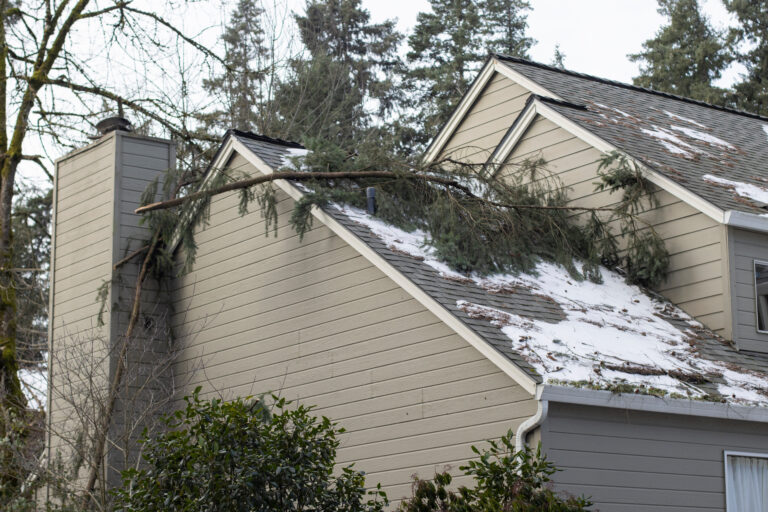
Roofs do not fail on your schedule. They fail during the holidays when your entire family is in town, or the week after you replaced the water heater, and the estimate lands somewhere north of what most households keep in savings.
So the first question homeowners ask is whether they can finance it. The second question, the one that matters more, is what that financing will cost them and how fast they can get an answer.
This is a simple walkthrough of roof financing options, what approval involves, how to read loan terms without getting surprised later, and the questions worth asking before you sign anything.
Why Roof Financing Comes Up So Often
A roof is not a discretionary project. You can postpone a kitchen upgrade indefinitely. You cannot postpone water getting into your sheathing.
It is also one of the projects real estate professionals push hardest. In the National Association of Realtors and NARI 2025 Remodeling Impact Report, new roofing was among the top three projects Realtors recommend sellers complete before listing, cited by 37% of agents, and 43% reported increased demand for it over the prior two years. Homeowners rated a new roof a perfect 10 on the report’s Joy Score, the measure of satisfaction after a project is done.
None of that helps if the money is not sitting in an account. Financing is what lets a homeowner replace a roof now rather than patching it for three more winters and paying for the damage that accumulates in the meantime.
The Main Roof Financing Options
There are four paths, and they are not interchangeable. Which one fits depends on your equity, your credit score, how fast you need funding, and how long you want to repay.
Contractor-Arranged Financing Through Third-Party Lenders
Many roofing companies, including ours, work with outside finance companies that specialize in home improvement lending. This is the fastest route in most cases. Applications are typically completed online or by phone, and approval notices often arrive within minutes rather than days.
An important note: Russell Quality Roofing does not provide financing. We do not lend money, set rates, or make approval decisions. All financing is arranged through third-party finance companies, and your loan agreement is with them, not with us. Current programs available to approved applicants include six months same as cash, with rates from 9.99% to 11.99% on approved credit.
Best for: speed, straightforward roofing projects, homeowners who would rather not touch their home equity.
Personal Loans From a Bank or Credit Union
An unsecured personal loan is money borrowed on your signature rather than against your house. You receive a lump sum, repay it in fixed monthly payments at fixed interest rates, and no lien is placed on the property.
The tradeoff is rate. Because the lender has no collateral, unsecured personal loans generally carry higher interest rates than secured options. The Federal Reserve’s G.19 consumer credit release most recently reported the average rate on a 24-month personal loan at commercial banks at 11.86%. Actual offers vary widely depending on credit, ranging roughly from the mid-single digits for excellent credit to the mid-30s at the high end. Credit unions frequently come in below bank averages, and federal credit unions are capped at 18% by law, which makes them worth a call even if you are not already a member.
Best for: homeowners with solid credit who want no lien on the house and a predictable payoff date.
Home Equity Loans and HELOCs
A home equity loan lets you borrow against the value you have built in the house, delivered as a lump sum with a fixed rate. A HELOC works more like a credit line you draw against as needed. Both are secured by your home, which is why they usually carry the lowest interest rates of any option here and offer long repayment terms, sometimes stretching to 30 years.
Both also carry the obvious risk. The house is the collateral. Miss enough payments and you are not dealing with a collections call, you are dealing with your mortgage lender.
Russell Quality Roofing does not offer home equity loans or HELOCs. These come from your bank, your credit union, or a mortgage lender directly.
Best for: homeowners with meaningful equity, good credit, and time to wait, since appraisal and title work extend the timeline considerably.
Government-Insured Home Improvement Loans
The FHA Title I Property Improvement Loan program insures loans that private lenders make for repairs and improvements, including roofing. According to the FDIC’s program summary, the program is designed partly for homeowners with limited equity who cannot use a home equity product. Under current limits, single-family loans are capped at $25,000 with terms up to 20 years, the loans are fixed rate, and only HUD-approved lenders can originate them. HUD insures the loan. It does not lend the money.
Russell Quality Roofing does not offer FHA-insured loans. If this route interests you, you would work with an FHA-approved lender directly.
Best for: homeowners with limited equity who fit the program criteria and can accommodate a longer approval process.
Where Homeowner’s Insurance Fits
Insurance isn’t a financing option, but it’s important to factor in first if storm damage is part of why you need a new roof, since any covered portion changes how much you may need to finance. Homeowner’s insurance can cover roofing costs for certain types of sudden damage, such as wind or hail, subject to your policy limits, your deductible, and your carrier’s determination.
Russell Quality Roofing does not process or manage insurance claims. What we do is inspect the roof, document conditions, and provide the information your insurer requests. You contact your insurance company and follow their claim process. If a claim is approved, financing can cover the deductible and any upgrades beyond what the policy pays.
What Approval Looks Like
The timeline varies enormously by lender type. Contractor-arranged financing through home improvement lenders often returns a decision in minutes. Bank and credit union personal loans commonly take several business days, and 10 days or more is not unusual once underwriting and verification are factored in. Home equity products take the longest because they require an appraisal and title work.
What you will be asked for is fairly consistent: identifying information, income details, employment, the loan amount you want, and basic property information. Home improvement lenders often ask for the contractor’s estimate as well.
Credit matters, but not identically across products. Credit requirements are strictest on unsecured personal loans, where the lender has no collateral. Secured products weigh equity alongside credit. Ask any lender whether their initial check is a soft pull or a hard pull, because shopping several lenders with hard pulls in a short window can affect your score.
One note. Get your estimate before you apply. Applying for a loan amount you guessed at means either borrowing more than you need and paying interest on it, or coming up short mid-project. Our roof replacement cost estimator will give you a realistic range in a couple of minutes.
How to Read the Terms Without Getting Surprised
This is where roof financing goes wrong for people, and almost all of it is avoidable.
APR is the number that matters, not the interest rate. APR folds in origination and other lender charges, so it reflects what the money actually costs. Two loans with identical interest rates can carry very different APRs.
Understand deferred interest on promotional offers. Same as cash and zero interest promotions are common across the home improvement industry, and they work the same way nearly everywhere. Pay the balance in full before the promotional period ends and you owe no interest. Fail to pay it off in time and many lenders charge interest retroactively, calculated from the original purchase date rather than from the end of the promotion. That is not a trick, it is how the products are structured, but it is the single most misunderstood term in home improvement lending. Ask the lender directly how theirs is written and get the answer before you sign.
Look at total amount repaid, not just the monthly payment. A longer term produces a smaller monthly payment and a larger total cost. Both facts are true at the same time, and lenders tend to lead with the first one. Run the math on what you will actually pay over the life of the loan.
Ask about prepayment penalties. Some lenders charge a fee if you pay the principal off early. If you expect to pay ahead, this term is worth more to you than a fraction of a percent on the rate.
Check the minimum amount and any fees. Some lenders set a minimum loan amount that may exceed a smaller roof repair. Ask about origination fees, late fees, and any annual fees on a line of credit.
Confirm availability in your area. Lending programs operate across multiple states, but terms and availability can vary depending on your geographical area. What a lender advertises nationally is not always what is offered in Idaho or Washington.
The Change Order Question Almost Nobody Asks
Every roof replacement we perform includes a complete tear-off of the existing roofing materials. Our estimates include removal of one layer of old roofing. If we uncover a second layer, that becomes a change order. And once the deck is exposed, any damaged or rotted sheathing has to be replaced to meet code, which is another change order. Nobody can see through shingles, so nobody can price those items in advance.
That matters for financing. Ask your lender two things before you close: whether the loan amount can be increased mid-project if the scope changes, and how quickly that can happen. Some home improvement lenders accommodate it easily. Some do not, which means change orders come out of pocket. Knowing which situation you are in before the tear-off starts is considerably more comfortable than finding out on day two.
Questions to Ask Before You Sign
- What is the APR, not just the interest rate?
- Is the rate fixed or variable?
- What is the total amount I will repay over the full term?
- If this is a promotional offer, what happens if I do not pay it off in time?
- Are there prepayment penalties?
- What fees does the lender charge, and are they deducted from the loan proceeds?
- Is there a minimum loan amount?
- Is the initial credit check a soft pull or a hard pull?
- Can the loan amount be adjusted if the project scope changes?
- Who exactly am I borrowing from, and who do I call if there is a problem? When you work with one of our third-party financing partners, your agreement is with the lender. Know their name before you sign it.
How Financing Works With Russell Quality Roofing
The order of operations is simple. We inspect the roof, we give you a single project-based estimate, and then you decide how to pay for it.
If financing makes sense, we can point you to the third-party finance companies we work with. To be clear again, we are not the lender. Those companies set the credit requirements, make the approval decision, and hold the loan. Programs available to approved applicants include six months same as cash, with rates from 9.99 percent to 11.99 percent on approved credit. For many homeowners that lands a new roof in the range of a monthly car payment, though what you qualify for depends on several factors including your credit and the loan amount.
Visit our financing page to see our current program details and how to apply. If you are weighing options market-wide, our Spokane homeowner’s guide to roof financing covers the regional picture in more depth.
Common Questions About Roof Financing
Can I get roof financing with a lower credit score?
Often, yes, though at a higher rate. Credit requirements vary by lender and product, and secured options generally have more flexibility than unsecured personal loans because the lender has collateral. Getting multiple quotes is worth the effort, since the spread between offers at the same credit tier can be significant. Just confirm each lender is doing a soft credit pull for the initial comparison, not a hard pull, since several hard inquiries in a short window can lower your credit score before you’ve even chosen a lender.
Is it better to finance a roof or pay cash?
If you have the cash and it is not your entire emergency fund, paying outright avoids interest entirely. Financing makes sense when paying cash would leave you exposed, or when a promotional offer lets you spread payments without added cost. There is no universal answer, which is why comparing terms side by side beats taking the first offer.
Does financing a roof cost more in the long run?
Yes, unless you are inside a promotional period that you pay off in full. Interest is the price of not waiting. The relevant comparison is not financing against zero, it is financing against what continued deterioration would cost you in decking repairs and interior damage.
How fast can I actually get approved?
Through contractor-arranged home improvement lenders, frequently within minutes of applying. Through a bank or credit union, expect several days to more than a week. Through a home equity product, expect several weeks.
Can financing cover roof repairs, not just replacement?
Usually, though some lenders set a minimum loan amount that a smaller roof repair will not reach. Ask about the minimum before you apply.
Get the Estimate First and Secure Your Funding Before You Sign
Request your free estimate, then look into financing or confirm you have the funds available. The mistake we see most often isn’t choosing the wrong financing option, it’s signing the contract before funding is secured. Don’t sign until you know, for certain, how the project will be paid for.
Russell Quality Roofing has been a locally owned and operated business serving the Inland Northwest since 2007. We are licensed, bonded, and insured, an Owens Corning Platinum Preferred Contractor ranked among the top one percent of roofing contractors nationally, with hundreds of five-star reviews behind us.
We serve Lewiston and Clarkston, Moscow and Pullman, Spokane and Spokane Valley, Coeur d’Alene, Post Falls, Liberty Lake, Hayden, and surrounding areas.
When comparing roofing companies, look at the full scope of work included in each bid, not just which number is lowest. The estimate that leaves things out is not actually cheaper.
Request a free roofing estimate at (208) 791-5252 or through our free estimate page, and we will give you a real number to plan around before you talk to any lender.
Russell Quality Roofing: Built on Trust, Backed by Expertise.